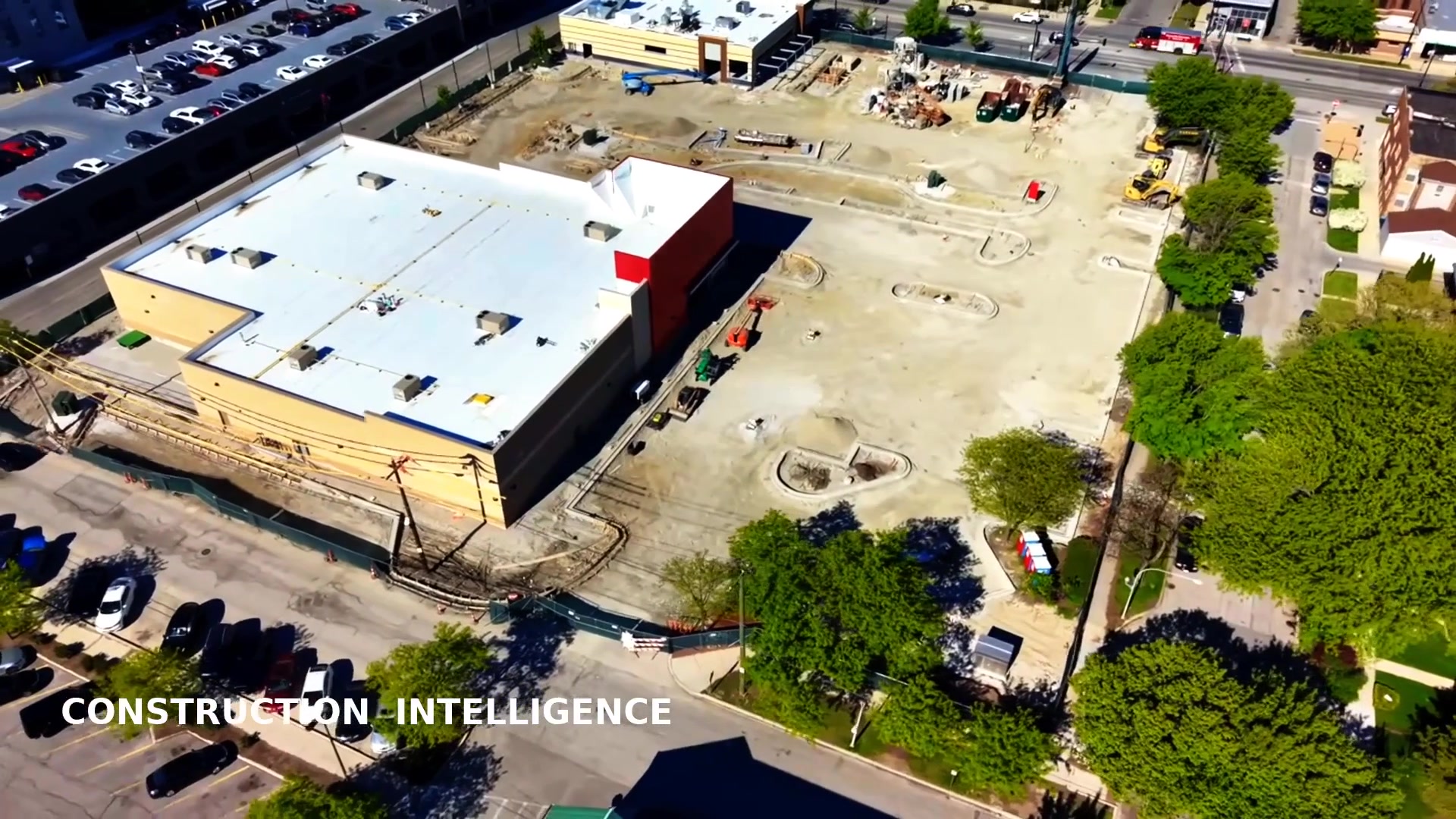
If you own or manage property in Chicago, sooner or later you have to answer a simple question: how do we actually know what shape the roof is in? For decades the only option was to send a person up a ladder or a lift to look around. Today an FAA Part 107 drone can survey the same roof in a fraction of the time, with high-resolution and thermal imagery that no one walking the surface could match. This page compares drone roof inspection vs. manual inspection honestly — on safety, speed, cost, accuracy, and how often you can realistically do it — so you can decide what makes sense for your building in Chicagoland.
The short version: for the vast majority of Chicago commercial roofs, flat membrane systems, steep residential roofs, and any building where safety or downtime is a concern, a drone inspection gives you better documentation for less money and less risk. Manual inspections still have a place, but it is a narrower one than most owners assume.
At-a-Glance Comparison
| Factor | Drone Roof Inspection | Manual Inspection |
|---|---|---|
| Safety | No one on the roof; zero fall risk | Ladders, lifts, fall-arrest, OSHA exposure |
| Speed | Under an hour on site | Half a day or more with setup |
| Cost | Lower; no rental or crew | Higher; lift rental + labor |
| Data | Full-roof photos, thermal, mapping | Visual notes, limited reach |
| Frequency | Easy to repeat seasonally | Costly to repeat often |
| Physical testing | Not possible from the air | Hands-on core sampling, probing |
Safety: The Biggest Difference
Roof falls are one of the leading causes of serious injury in construction and property maintenance. A manual inspection puts a human being on a surface that may be wet, icy, brittle, or structurally compromised — exactly the conditions you are inspecting for. In a Chicago winter, frost on a membrane roof or snow on a steep residential pitch turns a routine look into a real hazard.
A drone removes the person from the equation entirely. The pilot stays safely on the ground while the aircraft does the climbing. There are no ladders to stabilize, no lifts to rent, no fall-arrest harnesses to rig, and no liability for a worker stepping through a skylight. For property managers who answer to insurers and safety officers, that alone is often the deciding factor.
Speed and Downtime
Setting up a manual inspection is slow. You schedule a crew, position a boom or scissor lift, rope off the area, and work methodically across a surface a person can only cover so fast. On an occupied Chicago office building, retail center, or warehouse, that can mean blocked parking, closed entrances, and interrupted operations.
A drone flies the entire roof in minutes to under an hour, with no equipment staging and minimal disruption to tenants or traffic. Most clients get an annotated report within 24 to 48 hours. When you need answers before a sale closes, a storm-damage claim deadline, or a board meeting, that turnaround matters.
Cost: Where the Money Actually Goes
Manual inspections carry hidden costs. Lift or scaffolding rental, a multi-person crew, travel, and the downtime of the building all add up — and that is before anyone has analyzed a single finding. A drone inspection eliminates the rental and shrinks the crew to a single Part 107 pilot, so you pay for expertise and deliverables rather than equipment and risk.
Because drone surveys are faster and cheaper, you can also afford to do them more often, catching small problems while they are still cheap to fix instead of discovering them after water has already reached the deck. See why drones win on cost and ROI for a broader breakdown.
Accuracy and the Data You Keep
A manual inspector records what they can see and reach, usually as written notes and a handful of phone photos. The coverage is uneven, the steep or fragile areas get skipped, and the record is hard to compare year over year.
A drone captures the entire roof in consistent high resolution, and our thermal drone inspections add radiometric imagery that reveals trapped moisture and heat loss completely invisible to the naked eye. The output is a documented, georeferenced, repeatable dataset — annotated, ranked by severity, and ready to hand to a roofer, an insurer, or an asset manager. That is evidence, not opinion.
Frequency and Long-Term Monitoring
Because drone surveys are quick and affordable, you can build them into a maintenance cadence — before and after Chicago's freeze-thaw winters, after major storms, and at lease turnover. Repeating a manual inspection that often is rarely practical. Regular drone documentation creates a baseline so you can prove when damage occurred and how a roof is aging.
Insurance, Claims, and Documentation
When storm damage hits a Chicago property, the difference between a paid claim and a denied one is often documentation. A drone produces time-stamped, georeferenced imagery of the entire roof immediately after an event, giving adjusters clear evidence of hail bruising, wind-lifted membrane, or displaced flashing. A manual inspector can photograph only what they reach, and those scattered phone photos rarely tell the full story. Owners who keep a drone baseline of their roof before storm season can also prove a roof's prior condition, which protects them in disputes over whether damage is new or pre-existing. For pre-purchase due diligence on a commercial building, that same documented baseline keeps roof condition from becoming a surprise renegotiation or a lawsuit after closing.
What a Drone Roof Inspection Includes
Every drone roof job from Chicago Drone Service delivers more than raw pictures. You receive high-resolution visual imagery of the full roof, optional radiometric thermal imagery that reveals trapped moisture and insulation failures, and an annotated report that marks each anomaly, ranks it by severity, and recommends an action. That decision-ready document goes straight to your roofer, facility manager, insurer, or board — no interpretation of pretty heat maps required. Because every flight is georeferenced, your reports also stack up year over year so you can watch how the roof ages and plan capital budgets with real data instead of guesswork.
When a Manual Inspection Still Makes Sense
We are honest about this: a drone cannot touch the roof. When you need a physical core sample, a moisture probe through the membrane, a pull test on fasteners, or hands-on confirmation of a specific repair, a person has to go up. The smart workflow for most Chicago owners is to fly first, identify the exact problem zones from the imagery and thermal data, and then send a roofer straight to those spots instead of having them wander the whole roof. The drone makes the manual visit shorter, safer, and cheaper rather than replacing it entirely.
Bottom Line for Chicago Property Owners
For routine condition assessments, leak hunting, storm-damage documentation, pre-purchase due diligence, and ongoing monitoring, a drone roof inspection wins on safety, speed, cost, and the quality of the record you keep. Reserve the manual visit for the moments that genuinely require touching the material. Used together — drone first, targeted manual follow-up — you get the most thorough roof program for the least risk and expense across Chicagoland, from the Loop to the suburbs.
Frequently Asked Questions
Is a drone roof inspection as accurate as a manual inspection?
Yes, and usually more thorough. A drone documents the entire roof in high resolution plus thermal imagery, including areas no one should walk on, giving you repeatable evidence instead of partial notes.
Are drone roof inspections legal in Chicago?
Yes. We operate under FAA Part 107 with a certified Remote Pilot in Command, obtain LAANC authorization in O'Hare and Midway controlled airspace, and carry full commercial insurance.
When should I still get a manual inspection?
When you need physical core samples, probing, or fastener testing. A drone survey first lets you send the roofer directly to the problem areas, saving time and money.
How much does a drone roof inspection cost versus manual?
It is generally cheaper because there is no lift rental or large crew. Pricing depends on roof size, access, and whether thermal is included — request a free quote for your property.
How often should I inspect my Chicago roof?
Because drone surveys are fast and affordable, many owners fly before and after winter and after major storms to build a baseline and catch problems early.
Want documented proof of your roof's real condition without putting anyone in harm's way? Learn more about our thermal inspections and why drones beat traditional methods, or explore the Drone Knowledge Center.
Request a Free QuoteOr call Dan Gierke, FAA Part 107 pilot, directly at 773-213-6859.